Cross-Chain Price Gaps: The Arbitrage Playbook Sophisticated Traders Are Using Right Now
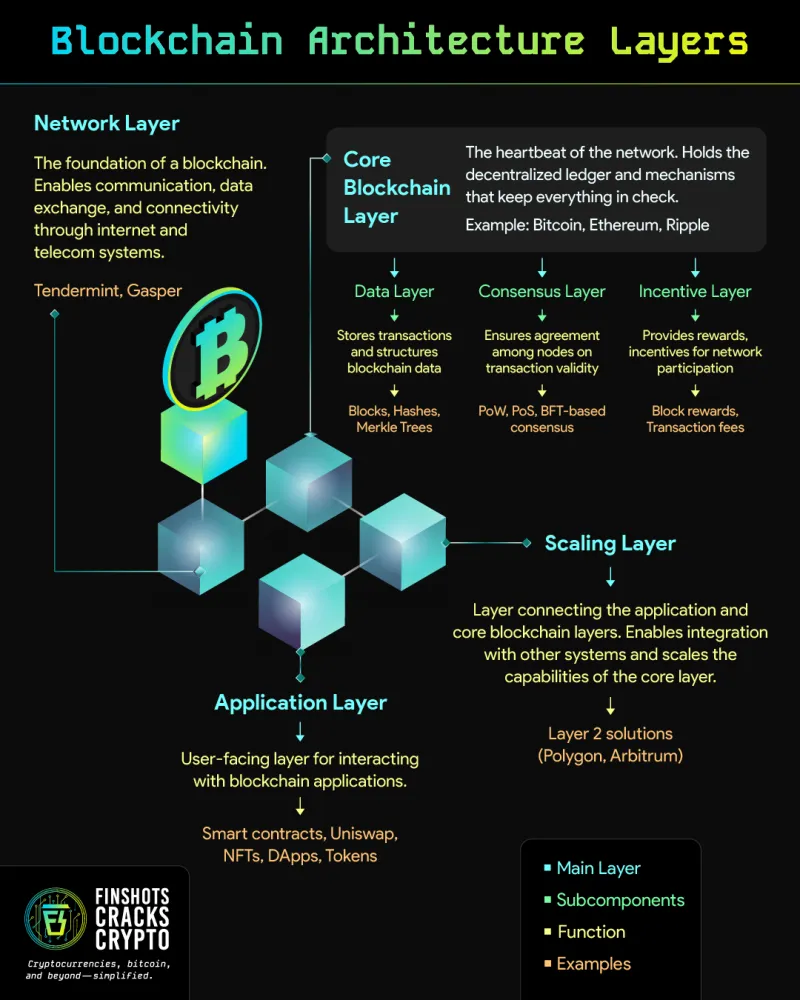
Photo: cryptocurrency blockchain network layers digital trading technology abstract, via cdn.finshots.app
For most retail investors, cryptocurrency arbitrage conjures images of outdated exchange bots and razor-thin margins. Yet a quieter, more technically demanding form of price exploitation has been gaining traction among professional-grade traders: cross-chain arbitrage between Layer 1 (L1) and Layer 2 (L2) networks. As Ethereum's ecosystem has matured and competing L2 solutions have proliferated, the structural conditions for persistent price gaps have become firmly entrenched — and a growing number of US-based traders are learning how to navigate them.
Understanding Why Price Gaps Exist Between Layers
At its core, a price discrepancy between an L1 and its associated L2 networks emerges from friction. Bridging assets between chains takes time, costs gas fees, and introduces smart contract risk. Because these barriers are real and non-trivial, market makers do not always move fast enough to equalize prices across every venue simultaneously.
Consider a token trading on Ethereum mainnet at $1.05 while the identical asset lists at $1.02 on Arbitrum. That three-cent gap may appear negligible in isolation, but when executed at scale across thousands of tokens and hundreds of daily cycles, the compounding effect becomes material. Traders who understand the underlying mechanics can systematically capture these spreads with a degree of repeatability that few other strategies offer in volatile markets.
Layer 2 networks — including Arbitrum, Optimism, zkSync Era, and Polygon's zkEVM — each have their own liquidity depth, fee structures, and settlement latency. These differences create a mosaic of micro-inefficiencies that do not self-correct instantly because capital movement between chains is constrained by bridge throughput and user willingness to pay bridging costs.
The Mechanics of a Cross-Chain Arbitrage Trade
Executing a cross-chain arbitrage trade involves several discrete steps, each carrying its own timing and cost considerations.
Step one is identifying the discrepancy. Traders use aggregator tools such as DeFiLlama, Synapse Protocol's analytics dashboard, or custom-built price monitors to scan token prices across multiple chains in real time. Dedicated arbitrage bots — many of which are open-source on GitHub — can be configured to alert traders when a spread exceeds a predefined threshold.
Step two is assessing net profitability. A gross spread of 0.5% can evaporate entirely once Ethereum mainnet gas fees, bridge fees, and L2 transaction costs are subtracted. Traders must calculate the all-in cost of the round trip before committing capital. On days when Ethereum gas prices spike — a common occurrence during periods of network congestion — many otherwise viable opportunities become unprofitable.
Step three is execution speed. Cross-chain bridges such as Hop Protocol, Stargate Finance, and Across Protocol offer varying settlement times, typically ranging from a few minutes to upward of thirty minutes for optimistic rollup withdrawals. Traders who rely on fast bridges pay a premium in fees but reduce their exposure to price movement during transit.
Step four is managing inventory. Successful arbitrageurs typically maintain pre-funded wallets on multiple chains simultaneously, eliminating the bridging delay on at least one leg of the trade. This approach requires locking up capital across networks, which introduces opportunity cost and smart contract exposure.
Which Tokens Show the Most Consistent Opportunities
Not every token offers reliable cross-chain arbitrage potential. The best candidates tend to share a few common characteristics: they are listed on decentralized exchanges across multiple networks, they have moderate rather than extremely deep liquidity pools, and they experience periodic bursts of directional trading volume.
Mid-cap DeFi governance tokens — such as those associated with lending protocols and decentralized perpetuals platforms — have historically shown the most consistent spreads. When a protocol announces a governance vote or distributes staking rewards, trading activity often concentrates on one chain before rippling outward, creating a brief but exploitable window.
Wrapped versions of major assets, such as wrapped Bitcoin variants and liquid staking tokens, also generate recurrent discrepancies during periods of high redemption demand. When users rush to unstake or convert assets on a specific network, the localized selling pressure temporarily depresses prices relative to other chains.
Stablecoins — particularly algorithmic or partially collateralized variants — have historically offered some of the sharpest spreads, though the systemic risks associated with those assets warrant extreme caution.
Tools Every Cross-Chain Arbitrageur Should Know
Several platforms have emerged as essential infrastructure for traders pursuing this strategy:
- DeFiLlama's DEX aggregator: Provides cross-chain price comparisons and liquidity depth metrics in a single interface.
- Bungee Exchange: Routes cross-chain swaps through the most cost-efficient bridge at any given moment.
- Dune Analytics: Allows traders to build or access custom dashboards tracking bridge flows and on-chain price divergences.
- Tenderly: A smart contract simulation environment useful for testing arbitrage scripts before deploying real capital.
For traders with development backgrounds, building a custom monitoring script using the public APIs of major DEXs — Uniswap, Camelot on Arbitrum, Velodrome on Optimism — provides a competitive edge over relying on shared public tools.
Risks That Demand Serious Consideration
Cross-chain arbitrage is not a risk-free endeavor, and traders who treat it as such will eventually encounter a costly lesson.
Bridge risk remains the most severe concern. Cross-chain bridges have been the single largest vector for crypto hacks in recent years, with hundreds of millions of dollars lost to smart contract exploits. Every moment capital sits in a bridge contract, it is exposed to potential loss.
Execution risk is equally consequential. If the spread closes before a trade completes — whether due to a competing bot, a sudden liquidity injection, or a price update on one chain — the trader may end up holding an asset on the wrong chain at an unfavorable price.
Regulatory ambiguity also bears mention for US-based traders. The IRS treats each crypto-to-crypto transaction as a taxable event, meaning every leg of an arbitrage cycle potentially generates a reportable gain or loss. Traders executing dozens of arbitrage cycles daily should consult a tax professional familiar with digital asset reporting requirements.
A Strategy Worth the Complexity
Cross-chain arbitrage occupies a niche that rewards technical competence, disciplined capital management, and a thorough understanding of the infrastructure underpinning the multi-chain ecosystem. It is not a strategy suited to passive investors or those unfamiliar with DeFi mechanics. However, for traders willing to invest the time in building the necessary toolkit and risk framework, the persistent inefficiencies between L1 and L2 networks represent one of the more durable alpha opportunities available in today's digital asset markets.
As the multi-chain landscape continues to expand — with new L2 networks launching and existing ones deepening their liquidity — the complexity of these opportunities will only grow. Those who begin developing their cross-chain arbitrage capabilities now will be positioned to capitalize on an increasingly sophisticated market environment.