Follow the Stablecoins: Decoding Institutional Intentions Through USDC and USDT Flow Data
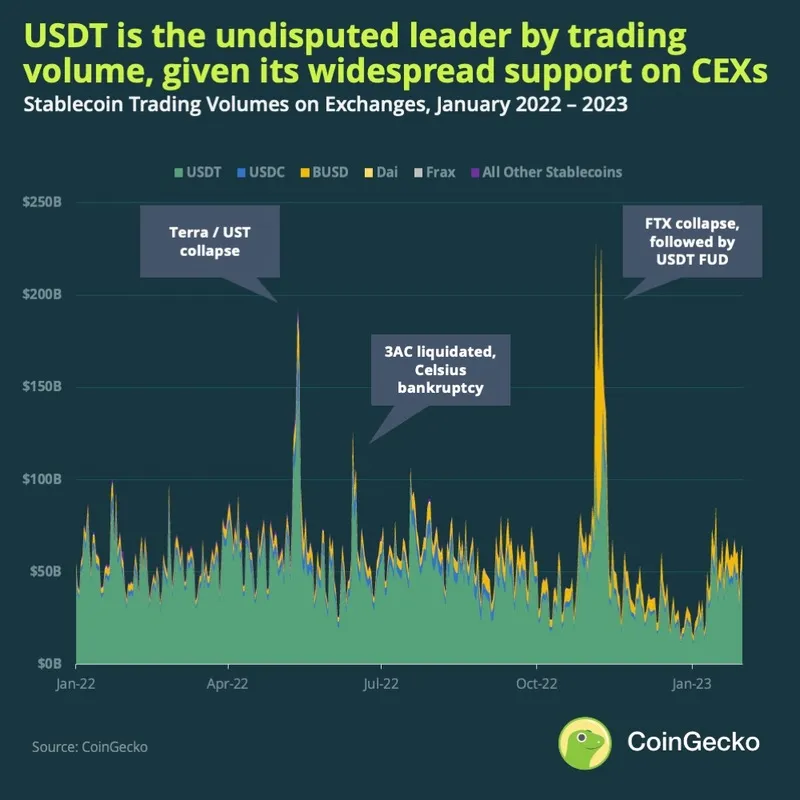
Photo: stablecoin USDC USDT cryptocurrency market data flow institutional trading, via s3.amazonaws.com
In financial markets, the most valuable information is rarely the most visible. Experienced traders understand that price is a lagging indicator — a record of decisions already made and capital already committed. The more useful discipline is identifying where capital is positioning before it moves, and in the cryptocurrency market, few signals carry more weight than the directional flow of stablecoins.
USDC and USDT, the two dominant dollar-pegged assets in the digital economy, function as the market's holding pattern. When institutional participants are uncertain, they park capital in stablecoins. When they are prepared to deploy, stablecoin balances on exchanges rise in anticipation. Understanding this behavioral pattern — and the on-chain data that makes it legible — is one of the more underutilized strategic advantages available to US-based crypto investors.
Why Stablecoins Are the Market's Most Honest Signal
Unlike Bitcoin or Ethereum, stablecoins do not appreciate in value. Holding them is, by design, a cost — an opportunity cost measured against the potential returns available in risk assets. This means that large-scale accumulation of stablecoins is almost never passive. It is deliberate.
When a fund manager, a proprietary trading desk, or a high-net-worth individual converts a significant portion of their portfolio into USDC or USDT, they are making a statement about their expectations. Either they believe risk assets are likely to decline and they are protecting capital, or they are preparing to deploy at a price level they consider attractive. In both cases, the stablecoin balance is a window into their thinking.
The transparency of public blockchains makes this information accessible in ways that are simply not possible in traditional financial markets. Equity markets do not broadcast institutional cash positions in real time. Crypto markets, by contrast, record every wallet balance and every transaction on an immutable public ledger. The raw data is available to anyone willing to look.
Exchange Inflows: The Deployment Signal
The most actionable stablecoin metric for directional traders is exchange inflow — the movement of USDC or USDT from external wallets into exchange-controlled addresses. This movement has a clear behavioral interpretation: capital that arrives on an exchange is capital that is preparing to be converted into another asset.
Historically, significant spikes in stablecoin exchange inflows have preceded notable price appreciation in major cryptocurrencies by a window of roughly 24 to 72 hours. The mechanism is straightforward. Large participants move stablecoins onto exchanges, accumulate positions over a period of hours or days to minimize market impact, and the resulting buy pressure eventually registers in price.
This signal is most reliable when several conditions are met simultaneously. First, the inflow should be materially above the 30-day average — routine operational transfers between wallets and exchanges generate consistent baseline noise that must be filtered out. Second, the inflow should be concentrated across multiple large wallets rather than originating from a single address, which reduces the likelihood that the movement reflects an isolated operational need. Third, the broader market should not already be in a strong uptrend, as deployment signals are most predictive when they precede rather than confirm directional momentum.
Exchange Outflows: Reading the Retreat
The inverse signal — stablecoin outflows from exchanges to external wallets — carries an equally important message. When large stablecoin balances leave exchange-controlled addresses and move to cold storage or DeFi protocols, it typically indicates one of two things: participants are either withdrawing capital from active deployment readiness, or they are moving stablecoins into yield-generating positions outside of centralized venues.
Either interpretation is meaningful. Withdrawal to cold storage suggests a reduction in near-term trading intent. Movement into DeFi lending protocols suggests that participants are optimizing for yield rather than waiting for a spot market entry. Both patterns, when they emerge at scale, indicate a reduction in the buying pressure available to support price appreciation in risk assets.
During the notable market corrections of 2022, on-chain data showed pronounced stablecoin outflows from major exchanges in the weeks preceding peak volatility events. Capital that had been positioned for deployment retreated to safer configurations as macro conditions deteriorated — a pattern that, in retrospect, was legible to those monitoring flow data in real time.
USDC vs. USDT: Two Stablecoins, Two Audiences
Not all stablecoin flows carry identical informational weight. USDC and USDT, while both dollar-pegged, attract somewhat different participant profiles, and this distinction matters for interpreting flow data.
USDC, issued by Circle and subject to regular attestations of its reserve holdings, has become the preferred stablecoin for institutional and regulated entities operating in the United States. Its integration with traditional financial infrastructure and its compliance posture make it the natural choice for funds navigating the current US regulatory environment. Large USDC flows, therefore, often carry a stronger institutional signal.
USDT, issued by Tether and dominant in offshore and Asian markets, reflects a broader and more diverse participant base. Its flows are higher in volume and noisier as a result, but they are particularly useful for gauging sentiment in retail-adjacent and emerging market segments of the global crypto ecosystem.
Monitoring both simultaneously provides a more complete picture. Divergence between USDC and USDT flows — for example, USDC accumulating on exchanges while USDT is simultaneously flowing out — can indicate a bifurcation in market expectations between institutional and retail participants, a condition that often resolves in favor of the institutional signal.
Building a Practical Monitoring Framework
Implementing a stablecoin flow strategy does not require proprietary data infrastructure. Several publicly available analytics platforms aggregate and visualize on-chain stablecoin data in formats that are accessible to individual investors.
A functional monitoring routine might include the following elements. On a daily basis, review the net change in stablecoin balances held by the five to ten largest centralized exchanges. On a weekly basis, assess the trend in total stablecoin market capitalization — sustained growth in aggregate stablecoin supply is historically associated with periods of capital accumulation ahead of market expansion. On a monthly basis, evaluate the distribution of stablecoin holdings across wallet size cohorts to identify whether accumulation is concentrated among large holders or distributed across the broader market.
This framework will not produce a precise entry signal on its own. Stablecoin flow data is most powerful when combined with other leading indicators, including funding rates in perpetual futures markets, options market positioning, and the broader macroeconomic environment affecting US dollar liquidity. But as a foundational layer of market intelligence, it is difficult to overstate its value.
The Strategic Advantage of Reading Invisible Money
The cryptocurrency market rewards those who can see around corners. Stablecoin flow data is not a guarantee of future price direction — no single indicator is — but it is one of the few tools available to retail investors in the United States that provides genuine insight into the positioning of larger, better-resourced market participants.
In a market where information asymmetry remains substantial, following the stablecoins is one of the most disciplined habits a serious investor can develop. The money may be stable, but the signals it sends are anything but static.