Decentralized in Name Only: The Structural Power Imbalances Hiding Inside Token Governance Systems
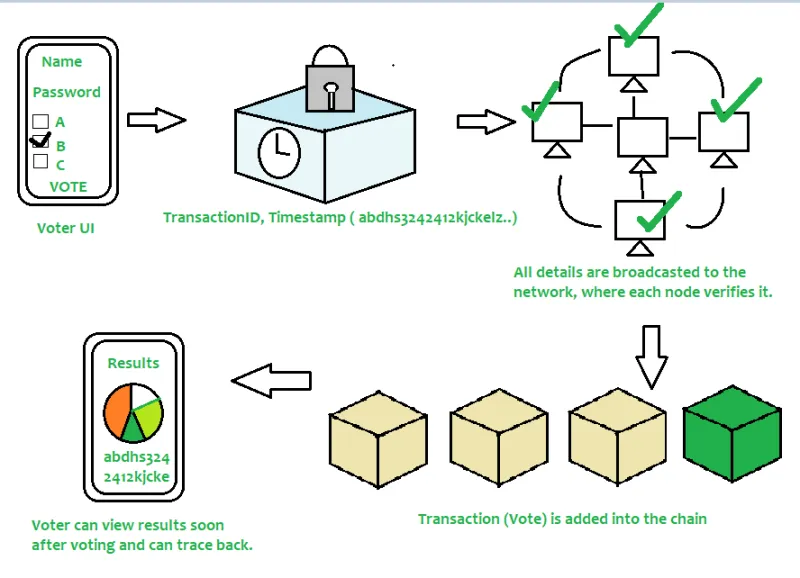
Photo: blockchain governance voting tokens decentralized power structure, via media.geeksforgeeks.org
The promise is elegant and genuinely compelling: rather than a corporation or a small executive team making decisions about a protocol's future, token holders vote. Every participant has a voice proportional to their stake. Power is distributed. Democracy is encoded.
The reality, examined closely, is considerably less inspiring.
Across the decentralized finance landscape, governance tokens have become one of the most effectively marketed features in crypto — and one of the most routinely misrepresented. For retail investors in the United States and globally, understanding the actual mechanics of token governance is not merely an academic exercise. It directly affects the value and trajectory of assets they hold.
The Architecture of Concentration
Most token governance systems allocate voting power on a one-token, one-vote basis. On its surface, this appears equitable. In practice, it replicates — and often amplifies — the concentration of power found in traditional corporate structures, with fewer of the legal protections that shareholders in public companies enjoy.
Consider how token distribution typically unfolds. A project launches with an initial allocation that reserves substantial percentages for the founding team, early-stage venture capital investors, and protocol advisors. These allocations are subject to vesting schedules, but even modest vesting periods often conclude before a project's governance system reaches meaningful community participation levels.
The result is that by the time a governance proposal reaches a vote, the entities with the largest token holdings are overwhelmingly insiders who acquired their positions at prices far below market rates. A retail investor who purchased governance tokens at current market prices holds a fraction of the voting weight of a venture firm that received an allocation at seed valuation.
This is not incidental. It is, in many cases, a structural feature.
Quorum Requirements as a Control Mechanism
A second layer of power concentration operates through quorum mechanics. Many governance systems require a minimum percentage of total token supply to participate in a vote for the result to be valid. When that quorum threshold is calibrated — deliberately or not — to a level that only a coordinated group of large holders can reliably achieve, the practical effect is veto power by default.
Small holders who wish to defeat an unfavorable proposal cannot simply vote against it. They must also mobilize sufficient participation to meet quorum, a collective action problem that consistently disadvantages distributed retail holders relative to organized institutional ones.
Several high-profile governance episodes have illustrated this dynamic. In multiple DeFi protocols, proposals that would have meaningfully redistributed protocol revenue toward smaller stakers or community contributors failed not because a majority voted against them, but because quorum was never reached — while competing proposals favoring insider interests sailed through with participation rates that suspiciously tracked the holdings of a handful of known early wallets.
Delegation Structures and the Illusion of Amplified Voice
Some protocols have implemented delegation systems as a partial remedy, allowing smaller holders to assign their voting power to representatives who will participate on their behalf. The intent is sound. The execution is frequently problematic.
In practice, delegation tends to consolidate power further rather than distribute it. The wallets that attract the most delegated votes are typically the most visible entities in a protocol's ecosystem — development foundations, prominent investors, and high-profile community figures who are often aligned with the project's core team. A retail holder delegating their governance tokens to a well-known validator or protocol contributor may feel they are participating in governance. In reality, they are amplifying a voice that was already dominant.
This is governance theater in its most sophisticated form: a mechanism that creates the sensation of participation while routing influence toward the same concentrated nodes that would have controlled outcomes regardless.
Evaluating Governance Quality: A Working Framework
For traders and investors who take governance seriously as a component of token due diligence — and they should, given how directly governance outcomes affect protocol economics — several evaluative criteria are worth applying systematically.
Token distribution transparency. Does the project publish a clear breakdown of token allocation, including team, investor, and foundation holdings? Projects that obscure this data are not simply being opaque about a technicality. They are concealing information directly relevant to how governance power is distributed.
Historical proposal outcomes. Reviewing the record of past governance votes reveals whether outcomes have consistently favored insider-aligned positions. A protocol where every major proposal passes with near-identical voting patterns, driven by a small number of large wallets, is demonstrating concentrated control regardless of its stated values.
Proposal threshold accessibility. Many governance systems require a minimum token holding to submit a proposal. When that threshold is set at a level that effectively excludes all but the largest holders from initiating governance actions, the community's role is reduced to ratifying decisions made by a select few.
Time-lock and implementation controls. Even when community votes produce outcomes that diverge from insider preferences, the implementation of those decisions often runs through multisig wallets or development teams with unilateral delay authority. Governance that can be indefinitely stalled by a small group of signers is not meaningfully decentralized.
Voter participation rates over time. Genuine community governance tends to show varied participation across proposals, with engagement levels reflecting the salience of individual issues. Suspiciously consistent participation rates — particularly ones that track closely with known whale wallet activity — suggest that organic community voice is minimal.
What Small Holders Can Realistically Expect
None of this is to suggest that token governance is universally fraudulent or that the concept is irredeemably flawed. Some protocols have made genuine, measurable progress toward broader participation through mechanisms like quadratic voting, time-weighted voting that discounts recently acquired tokens, and governance mining that rewards consistent participation rather than raw holdings.
But these implementations remain the exception. The dominant model in token governance today concentrates decision-making power in the hands of early capital while providing retail holders with the vocabulary of participation — proposals, votes, forums, temperature checks — without the substance.
For US-based investors evaluating a token's long-term prospects, governance structure is a material consideration. A protocol where a handful of wallets can unilaterally redirect treasury funds, adjust fee parameters, or override community sentiment is not a decentralized protocol in any meaningful sense. It is a company with an unusually sophisticated public relations strategy.
At BTC Token Off, our view is that governance documentation deserves the same scrutiny as tokenomics and technical audits. The question is not whether a project has governance. The question is whether that governance is designed to distribute power or merely to appear as though it does.
The answer, in most cases, is visible on the blockchain. You just have to know where to look.