Exit Traps in Plain Sight: How Low-Cap Token Prices Lie Until the Moment You Try to Cash Out
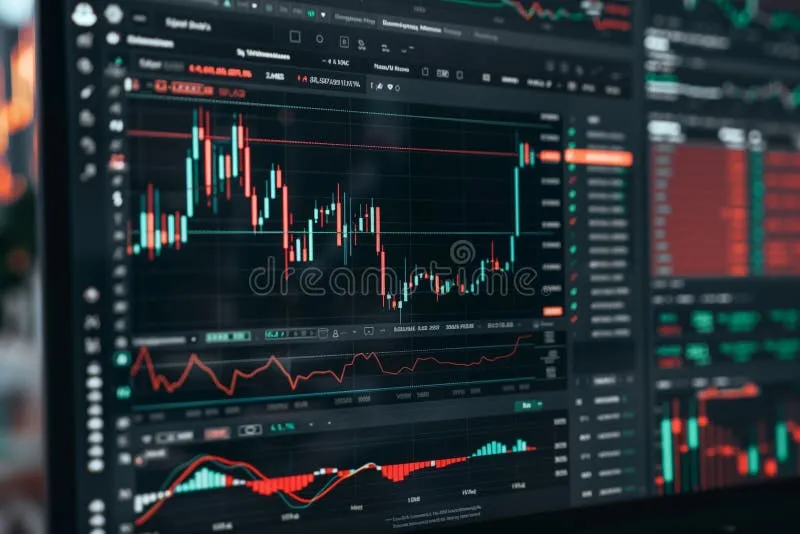
Photo: cryptocurrency trading screen with liquidity charts and decentralized exchange interface, via thumbs.dreamstime.com
There is a particular kind of frustration familiar to experienced crypto traders: watching a low-cap token post triple-digit percentage gains on a tracking dashboard, entering a position, and then discovering at the moment of exit that the profit was never real. The price displayed was accurate in the narrowest technical sense. The profit was not.
This is the liquidity mirage — one of the most consequential and least discussed structural realities in decentralized token markets. For US retail investors increasingly drawn to smaller DeFi projects and obscure altcoins, understanding this phenomenon is not a matter of sophistication. It is a matter of financial self-preservation.
What a Price Actually Represents in a Thin Market
On a centralized exchange with deep order books — think Coinbase or Kraken for established assets — the displayed price reflects a genuine consensus between buyers and sellers across thousands of active participants. The gap between the price shown and the price a trader receives is typically negligible.
Decentralized exchanges operate differently. Most use automated market maker (AMM) protocols, where prices are determined by the ratio of assets inside a liquidity pool rather than a traditional order book. When a liquidity pool is shallow — meaning the total value locked is small relative to a given trade size — even a modest buy or sell order moves the price dramatically.
For a low-cap token with $200,000 in total liquidity, a $10,000 sell order might represent 5% of the entire pool. The AMM's pricing formula will shift the execution price downward as the transaction processes. The trader receives far less than the price displayed at the moment the order was submitted. This is slippage, and in illiquid markets, it is not a minor inconvenience — it is a structural tax that can consume the majority of a paper gain.
The Fragmentation Problem Across DEXs
The situation is further complicated by how liquidity is distributed across competing decentralized exchanges. A token might appear on Uniswap, SushiSwap, and a handful of chain-specific DEXs simultaneously. Aggregators like 1inch attempt to route trades through the most favorable pools, but fragmented liquidity means that no single pool contains enough depth to absorb a meaningful exit without significant price impact.
When a trader reviews a token's price on a data aggregator like CoinGecko or DexScreener, that price is typically derived from recent transaction activity — often small trades that do not reflect what a larger exit would actually yield. The price is real for the last person who traded a tiny amount. It is fictional for anyone attempting to move a position of consequence.
How Thin Markets Manufacture Explosive Percentage Gains
The same mechanics that punish sellers also explain why low-cap tokens appear to post extraordinary gains. A coordinated sequence of small buy orders — sometimes organic, sometimes not — can push the displayed price of a token with minimal liquidity from $0.001 to $0.005 in hours. That is a 400% gain on paper.
But that price exists only at the margin. The total capital required to push a thinly traded token to these levels is a fraction of what the market capitalization figures imply. A $5 million "market cap" token might have $50,000 in actual liquidity. The cap figure is derived by multiplying circulating supply by the marginal last-trade price — a number that has no bearing on how much capital could realistically be extracted from the market.
This dynamic is not always the product of deliberate manipulation. It can emerge organically when retail enthusiasm drives buying pressure into an asset with no institutional market-making support. The result is identical: a price that overstates extractable value.
Practical Detection Methods Before Entering a Position
Identifying liquidity traps before committing capital requires examining metrics that most retail traders overlook.
Check total value locked against your intended position size. If the combined liquidity across all pools where a token trades is under $500,000, any position exceeding $5,000 to $10,000 will face meaningful slippage on exit. Use DEX-native liquidity data rather than market cap figures.
Simulate the trade before executing it. Uniswap and most major AMMs display a slippage estimate before a swap is confirmed. Run the sell-side simulation with your actual intended exit size. If the platform warns of 10% or greater price impact, that is not a warning to dismiss — it is the market telling you the price you see is not the price you will receive.
Examine 24-hour volume relative to market cap. A token with a $10 million market cap and $30,000 in daily volume is effectively illiquid regardless of what the cap figure implies. Healthy markets typically show volume-to-market-cap ratios that reflect genuine trading activity, not stale price discovery.
Look at the liquidity provider concentration. On-chain data tools such as Etherscan and Dune Analytics dashboards can reveal whether a token's liquidity pool is controlled by one or two wallets. Concentrated LP positions mean a single actor can withdraw liquidity at any time, instantly collapsing the pool and leaving remaining traders with no viable exit.
Review historical price impact on large past transactions. Tools like Dex.guru display individual transaction data including price impact. If prior large sells caused 15% to 30% slippage, your exit will likely perform similarly.
The Displayed Price Is a Starting Point, Not a Promise
The core mental adjustment required for low-cap token trading is treating any displayed price as a reference point rather than a guaranteed execution price. Sophisticated traders in this space do not ask what a token is worth. They ask what they can actually extract from the market given current liquidity conditions.
This distinction separates traders who consistently preserve capital from those who repeatedly discover that their largest paper gains produce the smallest real returns. The infrastructure of decentralized finance is remarkable in many respects, but it does not yet offer the depth or price integrity of mature capital markets for the vast majority of tokens trading within it.
For US investors accustomed to equity markets where price discovery is robust and execution is reliable, the adjustment to DeFi's liquidity realities requires deliberate recalibration. The numbers on the screen are not lying, exactly. They are simply telling a story about the last trade — not the next one.