When the Pool Goes Dry: How Liquidity Providers Abandon Token Pairs at the Worst Possible Moment
There is a particular kind of frustration familiar to anyone who has tried to exit a token position during a sharp market downturn: the price is moving, the sell order is in, and yet the trade either fails to execute, slips far beyond acceptable tolerance, or returns an error that effectively means the market has closed its doors. What looks like a liquid trading pair during calm conditions can transform into a near-impassable bottleneck the moment volatility spikes. This is not a coincidence. In many cases, it is the predictable outcome of how decentralized liquidity actually works.
The Architecture of Disappearing Liquidity
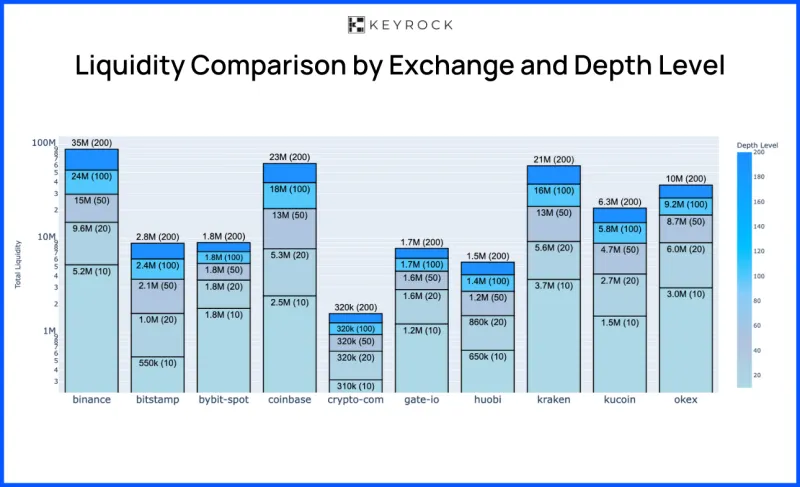
Decentralized exchanges built on automated market maker models — Uniswap, Curve, and their many derivatives — rely on liquidity providers, or LPs, to deposit paired assets into shared pools. These pools serve as the counterparty to every trade. When a trader swaps one token for another, they are not matched with a human seller. They are drawing from a reserve of assets that LPs have staked in exchange for a share of trading fees.
The arrangement works reasonably well under ordinary conditions. But the incentive structure that attracts LPs to a pool is the same structure that motivates them to leave it. Liquidity is not locked permanently. LPs can withdraw their capital at any time, and sophisticated participants — often institutions, protocol-affiliated market makers, or large wallet operators — monitor pool conditions closely enough to act before retail traders recognize what is happening.
During a price shock, two things occur simultaneously. First, trading volume surges as panicked sellers attempt to exit. Second, LPs face an accelerating risk of impermanent loss — the divergence in value between their pooled assets relative to simply holding them. When token prices move sharply in one direction, the LP's position automatically rebalances in a way that leaves them holding more of the depreciating asset. The rational response for a sophisticated LP is withdrawal. The result for the retail trader on the other side of that pool is a sudden collapse in available liquidity, a widened spread, and catastrophic slippage.
How Smart Contract Events Telegraph LP Exits
What makes this dynamic particularly consequential is that LP withdrawals are not invisible. They are recorded on-chain through specific contract events, and for those who know where to look, these signals can appear before the full liquidity drain becomes apparent in price charts or trading interfaces.
Every major DEX emits withdrawal events when an LP removes their position. On Ethereum-based platforms, these are ERC-20 transfer events to the zero address combined with LP token burns, both of which are publicly visible in real time through block explorers and on-chain analytics platforms. Tools such as Dune Analytics, Nansen, and various mempool monitoring services allow users to track these events as they occur.
Beyond individual withdrawal events, patterns in LP token movement can serve as early indicators. When large holders of LP tokens — identifiable through wallet clustering or labeled addresses — begin transferring those tokens off of liquidity platforms or to wallet addresses associated with prior exit behavior, that movement often precedes a visible liquidity decline by minutes or even hours. In some cases, governance forum discussions or Discord announcements from protocol-affiliated market makers have preceded large LP withdrawals, giving attentive observers a window of preparation time that most retail participants never access.
Liquidity Mining Incentives and the Mercenary Capital Problem
A significant portion of the liquidity in smaller and mid-cap token pairs is not organic. It is attracted through liquidity mining programs — protocols that distribute their native tokens as rewards to LPs who stake capital in designated pools. This approach successfully bootstraps liquidity in the short term, but it creates a category of participant sometimes called mercenary capital: LPs who are present only as long as the reward rate justifies the risk.
When reward emissions decline, when the protocol's native token loses value, or when a higher-yield opportunity emerges elsewhere, mercenary LPs exit with minimal notice. The withdrawal is often coordinated, particularly among yield aggregators that automate the process across thousands of wallets simultaneously. For a retail trader holding a token whose liquidity is primarily incentive-driven, the risk is not theoretical. The pool that appeared deep yesterday can be half its size tomorrow morning.
This dynamic is especially pronounced in newer or niche token pairs. Projects that launched with aggressive liquidity mining campaigns frequently see their pool depths collapse as emission schedules wind down. Traders who entered positions when liquidity appeared robust find themselves holding assets in markets that have effectively thinned to the point of dysfunction.
Identifying Pairs at Elevated Risk
Practical risk management in this environment begins with evaluating the composition and stability of a token pair's liquidity before entering a position, not after.
Several indicators warrant close attention. First, examine the concentration of LP positions. If a small number of wallets account for the majority of a pool's total value locked, that pool is structurally fragile. A single large LP decision to exit can reduce depth by thirty to fifty percent in a single transaction. DEX analytics dashboards typically display LP concentration data, and it is worth reviewing before committing capital to a less-liquid pair.
Second, assess whether the pool's liquidity is incentive-dependent. Review the protocol's tokenomics documentation and emission schedules. If a meaningful percentage of the pool's APY comes from reward token distributions rather than organic trading fees, evaluate how long those rewards are scheduled to continue and what the token's current market value implies about future reward sustainability.
Third, monitor pool depth trends over time rather than relying on a single snapshot. A pool that has been steadily declining in total value locked over several weeks is signaling ongoing LP attrition. That trend is far more informative than a point-in-time reading.
Finally, set realistic slippage expectations and test them before entering large positions. Executing a small test trade at your intended position size and observing the actual slippage provides direct evidence of the pool's functional depth — information that the displayed liquidity figure alone does not fully capture.
The Retail Trader's Structural Disadvantage
The uncomfortable reality of decentralized liquidity markets is that the participants best positioned to monitor and respond to LP withdrawal signals are the same participants whose decisions create the problem in the first place. Institutional LPs and protocol-connected market makers have access to real-time data feeds, automated monitoring systems, and direct communication channels with other large capital operators. Retail traders are, by default, working with delayed information and limited tooling.
This does not mean the situation is without recourse. On-chain data is public, and the analytical tools to interpret it are increasingly accessible. But it does mean that retail participants who treat DEX liquidity as a stable feature of the market — rather than a dynamic and self-interested arrangement — are operating with a fundamentally flawed assumption.
Liquidity in decentralized markets is rented, not owned. It arrives when conditions favor it and departs the moment those conditions shift. Understanding that distinction, and building it into every trading decision, is among the more important adjustments a serious crypto market participant can make.